Introduction
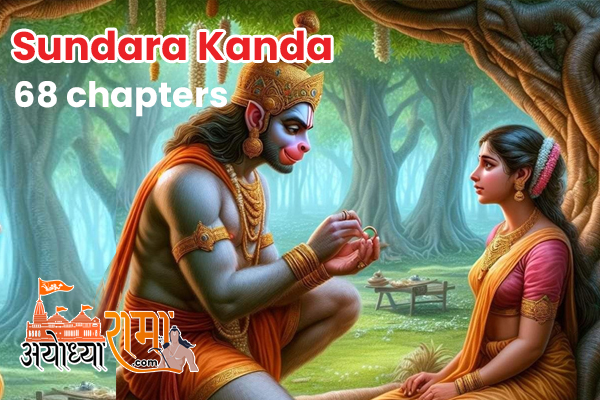
Hanuma falls in a dilemma whether to console Seetha or to remain silent. Finally Hanuma decides to console Seetha, by eulogising Rama’s attributes in a sweet voice, so that Seetha can give credence to his words.
Verse 1
हनुमान् अपि विक्रान्तः सर्वम् शुश्राव तत्त्वतः |
सीतायाः त्रिजटायाः च राक्षसीनाम् च तर्जनम् || ५-३०-१
The valiant Hanuma also heard truly all those words of Seetha, Trijata and the threatening words of the female demons.
1. vikraantaH = the valiant; hanumaanapi = Hanuma also; attvataH = truly; shushraava = heard; sarvam = all those words; siitaayaashcha = of Seetha; trijaTaayaashcha = of Trijata; tarjanam = and the threatening words; raakSasiinaam = of the female demons.
Verse 2
अवेक्षमाणः ताम् देवीम् देवताम् इव नन्दने |
ततो बहु विधाम् चिन्ताम् चिन्तयामास वानरः || ५-३०-२
Thereafter, seeing that Seetha as a divine lady in the garden of Nandana, Hanuma echoed his thought in various ways.
2. tataH = thereafter; avekSamaaNaH = seeing; taam deviim = that Seetha; devataamiva = as a divine lady; nandane = in the garden of Nanadana; vaanaraH = Hanuma; chintayaamaasa = reflected; chintaam = his thought; bahuvidhaam = in various ways.
Verse 3
याम् कपीनाम् सहस्राणि सुबहूनि अयुतानि च |
दिक्षु सर्वासु मार्गन्ते सा इयम् आसादिता मया || ५-३०-३
“Which Seetha is being searched in all directions by many thousands and myriads of monkeys, the same Seetha has been found by me.”
3. yaam = which Seetha; maargante = is being searched; sarvaasu = in all; dikSu = directions; subahuum = by many; sahasraaNi = thousans; ayutaani cha = and myriads; kapiinaam = of monkeys; saa iyam = the same Seetha; aasaaditaa = has been found; mayaa = by me.
Verse 4
चारेण तु सुयुक्तेन शत्रोः शक्तिम् अवेक्षिता |
गूढेन चरता तावत् अवेक्षितम् इदम् मया || ५-३०-४
“By me, employed thoughtfully (by my Master) as a secret agent and gone about secretly with a view to ascertain the enemy’s strength, this has been perceived.
4. mayaa = by me; suyuktena = employed thoughtfully (by my Master); chaareNa = as a secret agent; charataa = and gone about; guuDhena = secretly; shatroH shakti vyapekSya = in my view to ascertain the enemy’s strength; idam = this; avekSitam taavat = has been perceived.
Verse 5
राक्षसानाम् विशेषः च पुरी च इयम् अवेक्षिता |
राक्षस अधिपतेः अस्य प्रभावो रावणस्य च || ५-३०-५
“The characteristics of demons, this town and the power of the king of demons, Ravana, have been perceived by me.”
5. visheSashcha = the characteristics of; raakSasaanaam = demons; iyam = this; puriicha = town; prabhaavashcha = and the power; raavaNasya = of Ravana; raakSasaadhipate = the king of demons; avekSitaa = have been perceived (by me).
Verse 6
युक्तम् तस्य अप्रमेयस्य सर्व सत्त्व दयावतः |
समाश्वासयितुम् भार्याम् पतिदर्शन कान्क्षिणीम् || ५-३०-६
“It is proper for me to console the wife of Rama, desirous of seeing her husband who is compassionate towards all beings and who is of immeasurable might.”
6. yuktam = It is proper; samaashvaasayitum patidarshanakaankSiNiim = to console her who is desirous of seeing her husband; bhaaryaam = the wife; tasya = of Rama; sarva sattva dayaavataH = who is compassionate towards all beings; aprameyasya = and who is of immeasurable might.
Verse 7
अहम् आश्वासयामि एनाम् पूर्ण चन्द्र निभ आननाम् |
अदृष्ट दुह्खाम् दुह्खस्य न हि अन्तम् अधिगच्छतीम् || ५-३०-७
“I shall console this woman, whose face resembles a full moon, who is having an unforeseen affliction, who is tormented by grief and who is not attaining the end to her affliction.”
7. aham = I; aashvaasayaam = shall console; enaam = this woman; puurNachandra nibhaananaam = whose face resembles a full moon; adR^iSTa duHkhaam = who is having an unforeseen affliction; duHkhaartam = who is tormented by grief; agachchhatiim = who is tormented by grief; duHkhasya antam = the end of her affliction.
Verse 8
यदि हि अहम् इमाम् देवीम् शोक उपहत चेतनाम् |
अनाश्वास्य गमिष्यामि दोषवत् गमनम् भवेत् || ५-३०-८
“If I return without consoling this Seetha, the wife of Rama, even though her mind is tormented by grief, my departure becomes blemished.”
8. aham yadi gamiSyaami = If I return; anaashvaasya = without consoling; imaam deviim = this Seetha; the wife of Rama; shokopahata chetanaamapi = even though her mind is tormented by grief; gamanam = my departure; bhavet = becomes; doSavat = blemished.
Verse 9
गते हि मयि तत्र इयम् राज पुत्री यशस्विनी |
परित्राणम् अविन्दन्ती जानकी जीवितम् त्यजेत् || ५-३०-९
“Not finding a rescue when I return to Kishkindha, the illustrious princess Seetha may give up her life.”
9. mayi gate = when I return; tatra = there; yashashvinii = the illustrious; raajaputrii = princess; janakii = Seetha; tyajet = may give up; jiivitam = her life; avindantii = not finding; paritraaNaam = a rescue.
Verse 10
मया च स महाबाहुः पूर्ण चन्द्र निभ आननः |
समाश्वासयितुम् न्याय्यः सीता दर्शन लालसः || ५-३०-१०
“That long-armed Rama having the countenance of a full moon, eagerly longing to see Seetha, is fit to be consoled by me.”
10. saH = that Rama; mahaa baahuH = the long armed; puurNachandra nibhaananaH = with the countenance of a full moon; siitaadarrshana laalasaH = eagerly longing for seeing Seetha; nyaayyaH = is fit; samaashvaasayitum = to be consoled by me.
Verse 11
निशा चरीणाम् प्रत्यक्षम् अक्षमम् च अभिभाषणम् |
कथम् नु खलु कर्तव्यम् इदम् कृच्छ्र गतो हि अहम् || ५-३०-११
“It is not proper to speak with her within the sight of these female-demons. How indeed is this to be done? I am indeed perplexed.”
11. anarham = It is not proper; abhibhaaSitum = speak (with her); pratyakSam = within the sight of nishaachariiNaam = the female-demon; katham = how; idam = is this; kartvyam khalu nu = indeed to be done?; aham = I; kR^ichchhragato hi = am indeed perplexed.
Verse 12
अनेन रात्रि शेषेण यदि न आश्वास्यते मया |
सर्वथा न अस्ति संदेहः परित्यक्ष्यति जीवितम् || ५-३०-१२
“If she is not consoled by me during the rest of this night, she will forsake her life by all means. There is no doubt about it.”
12. naashvaasyate yadi = If she is not consoled; mayaa = by me; anena raatri sheSeNa = during the rest of this night; parityakSyati = she will forsake; jiivitam = her life; sarvathaa = by all means; naasti = there is no; sandehaH = doubt.
Verse 13
रामः च यदि पृच्छेन् माम् किम् माम् सीता अब्रवीत् वचः |
किम् अहम् तम् प्रतिब्रूयाम् असम्भाष्य सुमध्यमाम् || ५-३०-१३
“If Rama enquires of me as to what words did Seetha speak about him, what can I say to Rama without speaking now to this Seetha, the slender-waisted lady?”
13. raamashcha pR^ichchhedyadi = If Rama enquires of; maam = me; kim = (as to) what; vachaH = words; siitaa abraviit = did Seetha speak; maam = about me; kim = what; aham bruuyaam = can I speak; tam prati = about that Rama; asambhaaSya = without speaking; sumadhyamaam = to this Seetha; the slender waisted lady.
Verse 14
सीता संदेश रहितम् माम् इतः त्वरया गतम् |
निर्दहेत् अपि काकुत्स्थः क्रुद्धः तीव्रेण चक्षुषा || ५-३०-१४
“To me returning in haste from here without carrying Seetha’s message Rama may get irritated and burn me up with his pungent eyes.”
14. maam = to me; gatam = returning; tvarayaa = in haste; itaH = from here; siitaa sandesha rahitam = without carrying Seetha’s message; kaakutthsaH = Rama; kruddhaH = getting irritated; nirdahedapi = will burn me up; tiivreNa chakSuSaa = with his pungent eyes.
Verse 15
यदि चेत् योजयिष्यामि भर्तारम् राम कारणात् |
व्यर्थम् आगमनम् तस्य ससैन्यस्य भविष्यति || ५-३०-१५
“Even if I instigate my master Sugreeva to do his best in the cause of Rama, his arrival here with an army will be futile.”
15. yadi cha udyojayiSyaami bhartaaram = even if I instigate my master Sugreeva to do his best; raamakaaraNaat = in the cause of Rama; tasya = his; aagamanam = arrival; sasainyasya = with an army; bhaviSyati = will be vyartham = futile.
Verse 16
अन्तरम् तु अहम् आसाद्य राक्षसीनाम् इह स्थितः |
शनैः आश्वासयिष्यामि सम्ताप बहुलाम् इमाम् || ५-३०-१६
“Staying here itself and getting hold of an opportunity even in the midst of the female-demons (when they are in attentive), I shall slowly console Seetha who is very much in distress.”
16. sthitaH = staying; iha = here; aasaadya = getting hold of; antaram = an opportunity; raakSasiinaam = even in the midst of the female-demons; aham = I; shanaiH = shall slowly; aashvaasayiSyaami = console; imaam = her; samtaapa baahuLaam = who is very much in distress.
Verse 17
अहम् हि अतितनुः चैव वनरः च विशेषतः |
वाचम् च उदाहरिष्यामि मानुषीम् इह संस्कृताम् || ५-३०-१७
“However, I am very small in stature, particularly as a monkey and can speak now Sanskrit, the human language too.”
17. aham tu = I; however; atitanushcha = am very small; visheSataH = and particularly vaanarashcha = a money; iha = and now; udaahariSyaami = can speak; samskR^itaam = Sanskrit; maanuSiim = the human; vaachumcha = langugae too.
Verse 18
यदि वाचम् प्रदास्यामि द्विजातिः इव संस्कृताम् |
रावणम् मन्यमाना माम् सीता भीता भविष्यति || ५-३०-१८
वानरस्य विशेषेण कथं स्यादभिभाषणम्म् |
“If I use Sanskrit language like a brahmin, Seetha will get frightened, thinking me as Ravana. Especially, how can a monkey speak it?”
18. pradaasyaami yadi = If I use; samkR^itaam vaacham = Sankrit language; dvijaatiriva = like a brahmin; siitaa = Seetha; bhiita bhaviSyati = well become frightened; masyamaanaa = thinking; maam = me; raavaNam = as Ravana; visheSeNa = especially; vaanarasya = for a monkey; katham = how; syaat = can it be; abhibhaaSaNam = spoken?
Verse 19
अवश्यम् एव वक्तव्यम् मानुषम् वाक्यम् अर्थवत् || ५-३०-१९
मया सान्त्वयितुम् शक्या न अन्यथा इयम् अनिन्दिता |
“Certainly, meaningful words of a human being are to be spoken by me. Otherwise, the virtuous Seetha cannot be consoled.”
19. avashyameva = certainly; arthavat = meaningful words; maanuSam = of a human being; vaktavyam = are to be spoken; mayaa = by me; anyathaa = otherwise; iyam = she; aninditaa = the irreproachable; na shakyaa = cannot be; saantvayitum = consoled.
Verse 20
सा इयम् आलोक्य मे रूपम् जानकी भाषितम् तथा || ५-३०-२०
रक्षोभिः त्रासिता पूर्वम् भूयः त्रासम् गमिष्यति |
“Looking at my figure and the language, Seetha who was already frightened previously by the demons, will get frightened again.”
20. aalokya = looking at; me = my; ruupam = figure; tathaa = and; bhaaSitam = language; jaanakii = Seetha; gamiSyati = will get; tvaasam = fear; bhuuyaH = again; saaiyam = she who; traasitaa = who was frightened; puurvam = previously; rakSobhiH = by demons.
Verse 21
ततो जात परित्रासा शब्दम् कुर्यान् मनस्विनी || ५-३०-२१
जानमाना विशाल अक्षी रावणम् काम रूपिणम् |
“Thereafter, this large-eyed Seetha who is full of mind, thinking me as Ravana who can assume any form at will, may shout loudly, engendered by fear.”
21. tataH = thereafter; vishaalaakSi = this large-eyed Seetha; manasvinii = who is full of mind; jaanaana = thinking; maam = me; raavaNam = as Ravana; kaama ruupiNam = who can assume any form at will; kuryaat = and may make; shabdam = a noise; jaata partitraasaa = engendered by fear.
Verse 22
सीतया च कृते शब्दे सहसा राक्षसी गणः || ५-३०-२२
नाना प्रहरणो घोरः समेयात् अन्तक उपमः |
“As soon as Seetha shouts loudly, a troop of female-demons, wielding various kinds of weapons and appearing dreadful as Yama the Lord of Death, may assemble here.”
22. sahasaa = as soon as; shabde = the noise; kR^ite = is made; siitayaa = by Seetha; raakSasiigaNaH = a troop of female-demons; ghoraH = dreadful; antakopamaH = as Yama the Lord of Death; sameyaat = may assemble (here); naanaapraharaNaH = wielding various kinds of weapons.
Verse 23
ततो माम् सम्परिक्षिप्य सर्वतो विकृत आननाः || ५-३०-२३
वधे च ग्रहणे चैव कुर्युः यत्नम् यथा बलम् |
“Then those ugly faced female-demons may encircle me from all sides and try to catch and kill me with all their might.”
23. tataH = then; vikR^itaananaH = those female demons with their ugly faces; samparikSipya = may encircle; maam = me; sarvataH = from all sides; kuryuH = and make; yatnam = an effort; grahaNe chaiva = to catch; vadhecha = and kill (me); yathaabalam = with all their might.
Verse 24
गृह्य शाखाः प्रशाखाश्च स्कन्धांश्चोत्तमशाखिनाम् || ५-३०-२४
दृष्ट्वा विपरिधावन्तं भवेयुर्भयशङ्किताः |
“Then, seeing me running hither and thither, seizing big branches, twigs and trunks of excellent trees, they may get alarmed with fear.”
24. dR^iSTyaa = seeing; viparidhaavantam = me running; hitter and thither; gR^ihya = grasping; shaakhaaH = big branches; prashaakhaashcha = small branches; skandhaamshcha = and trunks; uttamashaakhinaam = of excellent trees; bhaveyuH = they may become; bhaya shaNkitaaH = alarmed with fear.
Verse 25
मम रूपम् च सम्प्रेक्ष्य वनम् विचरतो महत् || ५-३०-२५
राक्षस्यो भय वित्रस्ता भवेयुः विकृत आननाः |
“The ugly faced female-demons will be frightened with fear, after seeing my huge figure wandering in the grove.”
25. raakSasyaH = the female-demons; vikR^itaananaaH = with their ugly faces; bhaveyuH = will be; bhayavitrastaaH = frightened with fear; samprekSye = by seeing mama = my; mahat = huge; ruupam = figure; vicharataH = wandering; vane = in the grove.
Verse 26
ततः कुर्युः समाह्वानम् राक्षस्यो रक्षसाम् अपि || ५-३०-२६
राक्षस इन्द्र नियुक्तानाम् राक्षस इन्द्र निवेशने |
“Then those female-demons may call the other demons too retained by Ravana in his house.”
26. tataH = then; raakSasyaH = the female demons; kuryuH samaahvaanam = may invite; rakSasaam api = other demons also; raakSasendra niyuktaanaam = retained by Ravana; raakSasendra niveshane = in the house of Ravana.
Verse 28
सम्क्रुद्धः तैः तु परितो विधमन् रक्षसाम् बलम् || ५-३०-२८
शक्नुयम् न तु सम्प्राप्तुम् परम् पारम् महाउदधेः |
“Surrounded on all sides by them, I may not be able to reach the other shore of the great ocean, while destroying the army of demons.”
28. samruddhaH = obstructed tightly; paritaH = around; taiH = by them; na shaknuyaam = I may not be able; sampraaptum = to reach; param paaram = the other shore; mahodadhe = of the great ocean; vidhaman = while destroying; balam = the army; rakSasaam = of demons.
Verse 27
ते शूल शर निस्त्रिंश विविध आयुध पाणयः || ५-३०-२७
आपतेयुः विमर्दे अस्मिन् वेगेन उद्विग्न कारिणः |
“Those female-demons with an element of turbulence and rapidity may rush into a battle with various kinds of weapons like spears lances and swords.”
27. te = those female-demons; udvega kaaraNaat = with an element of turbulence; vegena = and in the speed; aapateyuH = may rush into; asmin = this; vimarde = battle; shuula shakti nistrimsha vividhaayudha paaNayaH = with various kinds of weapons like spears; lances and swords.
Verse 30
हिंसा अभिरुचयो हिंस्युः इमाम् वा जनक आत्मजाम् || ५-३०-३०
विपन्नम् स्यात् ततः कार्यम् राम सुग्रीवयोः इदम् |
“Or the violent minded demons may kill this Seetha. Consequently this work of Rama and Sugreeva will be ruined.”
30. vaa = or; himsaabhiruchayaH = the violent-minded demons; himsyuH = may kill; imaam = this; jaanakaatmajam = Seetha; tataH = consequently; idam = this; kaaryam = work; raama sugriivayoH = of Rama and Sugreeva; vipannam syaat = will be ruined.
Verse 31
उद्देशे नष्ट मार्गे अस्मिन् राक्षसैः परिवारिते || ५-३०-३१
सागरेण परिक्षिप्ते गुप्ते वसति जानकी |
“Seetha is residing in this secret place, with a concealed access, surrounded by demons and encircled by an ocean.”
31. jaanakii = Seetha; vasati = is residing; asmin = in this; gupte = secret; uddeshe = place; naSTa maarge = with concealed access; parivaarite = surrounded; raakSasaiH = by demons; parikSipte = and encircled; saagareNa = by ocean.
Verse 32
विशस्ते वा गृहीते वा रक्षोभिः मयि सम्युगे || ५-३०-३२
न अन्यम् पश्यामि रामस्य सहायम् कार्य साधने |
“If I am killed in the battle or got captured by the demons, I do not see any other companion for Rama who can fulfill this work (of searching for Seetha).”
32. mayi vishaste = If I am killed; samyuge = in the battle; vaa = or; gR^ihite vaa = captured; rakSobhiH = by the demons; na pashyaami = I do not see; anyam = any other; sahaayam = companion; raamasya = for Rama; kaarya saadhane = in fulfilling this work (of searching for Seetha).
Verse 33
विमृशन् च न पश्यामि यो हते मयि वानरः || ५-३०-३३
शत योजन विस्तीर्णम् लन्घयेत महाउदधिम् |
“Even after due reflection, I do not see any monkey who can transgress the ocean with a breadth of one hundred Yojanas, in case I am killed.”
33. vimR^ishan cha = even after due reflection; na pashyaami = I do not see; yaH = any; vaanaraH = monkey; laN^ghayeta = who can transgress; mahodadhim = the ocean; shata yojana vistiirNam = with a breadth od one hundred yoganas; mayihate = if i got killed.”
Verse 34
कामम् हन्तुम् समर्थो अस्मि सहस्राणि अपि रक्षसाम् || ५-३०-३४
न तु शक्ष्यामि सम्प्राप्तुम् परम् पारम् महाउदधेः |
“I am competent to kill even thousands of demons. I am quite sure. But, after doing such a large battle, I may not be capable of reaching the other shore of the ocean.”
33. vimR^ishan cha = even after due reflection; na pashyaami = I do not see; yaH = any; vaanaraH = monkey; laN^ghayeta = who can transgress; mahodadhim = the ocean; shata yojana vistiirNam = with a breadth of one hundred yoganas; mayihate = if i got killed.”
Verse 35
असत्यानि च युद्धानि संशयो मे न रोचते || ५-३०-३५
कः च निह्संशयम् कार्यम् कुर्यात् प्राज्ञः ससंशयम् |
‘Conflicts are unreal too and to me, there is no desire for uncertainty. which intellectual will do an assured act with an apprehension?”
35. yuddhaani = conflicts; asatyaani cha = are unreal too; me = to me; na rochate = there is no desire; samshayaH = for uncertainty; kaH = which; praaJNyaH = intellectual; kuryaat = will do; niH samshayam = an assured; kaaryam = act; sasamshayam = with a doubt?”
Verse 36
एष दोषो महान् हि स्यान् मम सीता अभिभाषणे || ५-३०-३६
प्राण त्यागः च वैदेह्या भवेत् अनभिभाषणे |
“If I do not talk, there will be Seetha’s death. If I talk to Seetha, this great lapse will occur.”
36. anabhibhaaSaNe = If I do not talk; bhavet = there will be; vaidehyaaH = Seetha’s; praaNatyaagaH = death; siitaabhibhaaSaNe = If I talk to Seetha; eSaH = this; mahaan = great; doSaH = lapse; syaat = will occur.
Verse 37
भूताः च अर्था विनश्यन्ति देश काल विरोधिताः || ५-३०-३७
विक्लवम् दूतम् आसाद्य तमः सूर्य उदये यथा |
“Actions which are going to be accomplished shortly, get spoiled at the hands of a accomplished shortly, get spoiled at the hands of a confused messenger, when the actions are set in opposition to time and space, even as darkness disappears at sun rise.”
37. arthaaH = actions; bhuutaaH = which are going to be accomplished; vinashyanti = get spoiled; aasaadya = having reached (the hands of); viklabam = a confused; duutam = messenger; desha kaala virodhitaaH = when they are set in opposition to time and space; tamaH yathaa = even as darkness (disappears); suuryodaye = at sun-rise.
Verse 38
अर्थ अनर्थ अन्तरे बुद्धिः निश्चिता अपि न शोभते || ५-३०-३८
घातयन्ति हि कार्याणि दूताः पण्डित मानिनः |
“Even if a decision is taken, regarding what is worthy and what is worthless, it does not yield good results. Messengers boasting themselves to be learned, thus indeed ruin those actions.”
38. buddhiH = Intellect; na shobhate = does not shine; artha anarthaantare = between worthy and worthless acts; nishchitaapi = even if a decision is taken; duutaaH = messengers; paN^Dita maaninaH = boasting themselves as learned; ghaatayanti hi = indeed ruin; kaaryaaNi = the actions.
Verse 39
न विनश्येत् कथम् कार्यम् वैक्लव्यम् न कथम् भवेत् || ५-३०-३९
लन्घनम् च समुद्रस्य कथम् नु न वृथा भवेत् |
“How does not my work get spoiled? How should I avoid my feebleness? Also how does not my leaping across the sea become vain?”
39. katham nu = How; kaaryam = (does) the work; na vinashyate = not get spoiled?; katham = how; vaiklabyam = the feebleness; na bhavet = can not occur?; katham nu = also how; lamghanam cha = my leaping across the sea; na bhavet = does not become; vR^ithaa = vain?”
Verse 40
कथम् नु खलु वाक्यम् मे शृणुयान् न उद्विजेत च || ५-३०-४०
इति संचिन्त्य हनुमान् चकार मतिमान् मतिम् |
“How can Seetha hear my words without fear?” Thinking in this way, the wise Hanuma made up his mind (as follows):
40. katham nu = how (can Seetha); shR^iNuyaat = hear; me vaakyam = my words?; na udvijetavaa = or without fear; samchintya = thinking; iti = in this way; matimaan = the wise; hanumaan = Hanuma; chakaara = made up; matim = (his) mind (as follows):
Verse 41
रामम् अक्लिष्ट कर्माणम् स्व बन्धुम् अनुकीर्तयन् || ५-३०-४१
न एनाम् उद्वेजयिष्यामि तत् बन्धु गत मानसाम् |
“If I eulogize Rama, who is unwearied in action and a good relation, I shall not frighten her, whose mind is directed towards that relation.”
41. anukiirtayan = If I enlogige; raamam = Rama; akliSTa karmaaNam = who is unwearied in action; subandhum = and a good relation; nodvejayiSyaami = I shall not frighten; enaam = her; tadbandhugatamaanasaam = whose mind is directed towards that relation.
Verse 42 & 43
इक्ष्वाकूणाम् वरिष्ठस्य रामस्य विदित आत्मनः || ५-३०-४२
शुभानि धर्म युक्तानि वचनानि समर्पयन् |
श्रावयिष्यामि सर्वाणि मधुराम् प्रब्रुवन् गिरम् || ५-३०-४३
श्रद्धास्यति यथा हि इयम् तथा सर्वम् समादधे |
“Offering auspicious and righteous words about Rama the most excellent prince Ikshvaku dynasty who possesses a learned soul and myself speaking in a sweet voice, I shall make everything intelligible so that Seetha rightly believes everything.”
42; 43. samarpayan = offering; shubhaani = auspicious; dharma yuktaani = righteous; vachanaani = words; raamasya = about Rama; variSThasya = the most excellent man; ikSvaakuuNaam = in Ikshvaaku dynasty; viditaatmanaH = and possessing a learned soul; prabruvan = and speaking; madhuraam = in a sweet; giram = voice; samaadade shraavayiSyaami sarvaani = I shall make everything intelligible; iyam = that Seetha; yathaa tathaa = rightly; shraddhaasyati = believes; sarvam = everything.
Verse 44
इति स बहु विधम् महाअनुभावो |
जगति पतेः प्रमदाम् अवेक्षमाणः |
मधुरम् अवितथम् जगाद वाक्यम् |
द्रुम विटप अन्तरम् आस्थितो || ५-३०-४४
The noble-minded Hanuman, abiding in the midst of the twigs of the trees and seeing Seetha, spoke the following words of many kinds which were not futile.
44. saH hanumaan = that Hanuma; mahaanubhaavaH = of noble mind; aasthitaH = abiding; druma viTapaantaram = in the midst of the twigs of the trees; avekSamaaNaH = and seeing; pramadaam = the wife; jagatipate = of Rama; the Lord of the Earth; jagaade = spoke; iti = thus; vaakyam = the words; bahuvidham = of many kinds; avitatham = which were not futile.